Calico Rock Pollinator Garden Grows Its First Caterpillars
After three years of seeding, weeding and watering Calico Rock Pollinator Garden on Rodman Avenue made a fine showing this year as a place for butterflies, bees, deer and squirrels. Among the many blooms which lasted all summer, the garden grew its first milkweed plants. The plants were getting a good start, but they were only five or six inches high.
The North Central Master Naturalists plant, water and tend the garden, The City of Calico Rock keeps the areas mowed and provides water and The Community Foundation’s education program will use the gardens as education areas. Each organization pitches in to make the garden area grow plants that feed pollinators.
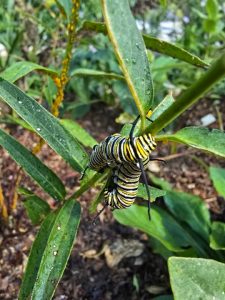
Last week the young milkweed plants in the main garden were hosts to nearly a half dozen Monarch butterfly caterpillars. This was a great moment in the garden’s three-year history. Not only were the plants feeding butterflies flower nectar, but we were also providing their young caterpillars a chance to grow and become adults in a hostile drought situation. Master Naturalist Margie Smotherman’s dependable, every-other-day-watering paid off, the garden was growing butterflies, not just feeding them.
Around noon the two-inch-long caterpillars were happily chomping on the small milkweed plants in the gardens, possibly eating a few aphids along the way. The beautifully striped insects were proof even small pollinator areas can make a big difference.
A few days later the caterpillars were not so attractive. They’d chomped all the leaves off the swamp, common and green antelopehorn milkweeds and then had a mass migration to the butterfly milkweed several yards away. This was an impressive hike for the tiny animals. During their migration the caterpillars had multiplied from six to about 16. The process began again, would there be enough milkweed leaves for the caterpillars to eat so they could form chrysalises and become butterflies?
Calls to NCAMN member Claire Cresto and several other pollinator gardeners proved what I feared, everyone else’s wild plantings had shut down during the drought. It was the same with the roadside milkweeds.
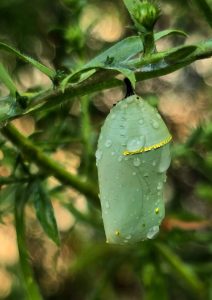
I carried three of the caterpillars home in a red Solo cup, they were all my first-year butterfly milkweed plants could support. Soon the insects were munching away on their new salad bar, in two days they disappeared one by one. At the Rodman Avenue Garden, the same thing happened. Monday the caterpillars were there eating contentedly, on Wednesday there was only one caterpillar left on a forlorn stems of the formerly pretty butterfly milkweed plants. None of their beautiful green pupa were visible, but they could be hidden on many of the nearby plants. Monarchs taste bad to bug eaters at every stage of their lives, it was unlikely all the caterpillars were in some bird’s stomach.
Did the remaining caterpillars disappear because they were searching for new plants or are they each tucked in a hidden chrysalis spending the winter dreaming of flights to come? Next spring will there be a flurry of orange and black monarchs, or will we have to replant new milkweeds and start over again? Sometimes nature just doesn’t provide answers.
If tending pollinator plants, building and repairing trails, checking Calico Creek for water quality and learning about nature appeals to you check out the Arkansas Master Naturalist Pages and NCAMN classes starting soon.